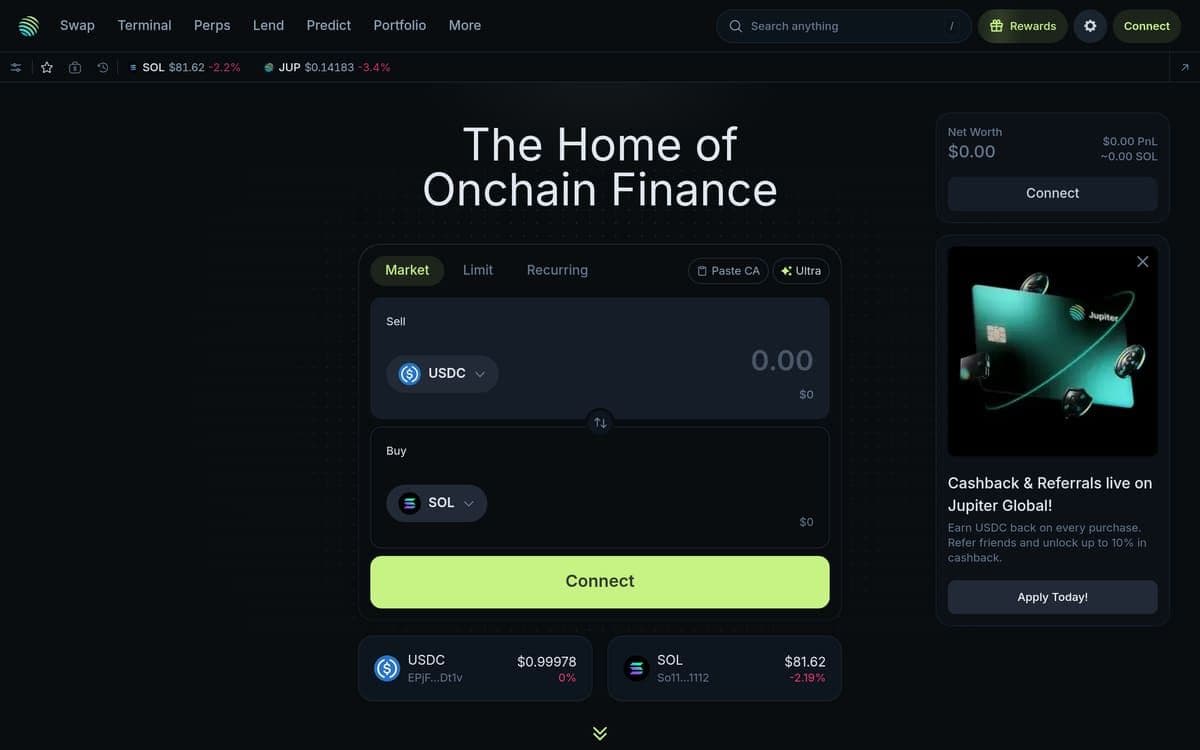
Introduction to Solana Swap Price Optimization
Are you leaving money on the table with suboptimal Solana swap prices? Solana, a fast-growing blockchain platform, has been gaining traction in the DeFi ecosystem, with its fast transaction times (averaging 400ms) and low fees (approximately 0.0001 SOL per transaction). As a result, the demand for efficient Solana trading strategies has increased, with traders seeking to optimize their swap prices to maximize profits. One key aspect of successful Solana trading is getting the best possible swap prices. This is where Jupiter comes in – a powerful solution that helps traders optimize their Solana swap prices using its advanced routing mechanism. By utilizing Jupiter, traders can ensure they are getting the most competitive prices for their trades, thereby elevating their overall trading experience. For instance, a trader looking to swap 100 SOL for USDT can use Jupiter to get the best possible price, potentially saving 1-2% in slippage compared to trading on a single decentralized exchange (DEX).
Understanding Jupiter's Routing Mechanism
How Jupiter Routes Trades
Jupiter's routing mechanism is designed to ensure that traders get the best possible prices for their Solana trades. The platform achieves this by aggregating liquidity from over 30 different DEXs, allowing it to route trades across multiple platforms to find the most competitive price. This process happens automatically, with Jupiter's algorithm continuously scanning the market to identify the best available prices. For example, if a trader wants to swap 500 SOL for USDC, Jupiter's algorithm will scan the market, identifying the best price available across all integrated DEXs, and execute the trade at that price. This approach not only saves traders time but also helps minimize slippage, which can significantly impact trade profitability. Pro tip: Utilizing Jupiter's routing for large trades (over $10,000) can help minimize slippage, as the platform can split the trade across multiple DEXs to avoid impacting market prices.
How Jupiter's Algorithm Ensures the Best Prices
Jupiter's algorithm is designed to ensure that traders get the best possible prices for their trades. The algorithm takes into account various factors, including liquidity, trading volume, and market conditions, to identify the most competitive prices available. By continuously scanning the market and adjusting to changing conditions, Jupiter's algorithm can help traders stay ahead of the curve and maximize their profits. For instance, during periods of high market volatility, Jupiter's algorithm can help traders navigate the market, identifying the best prices and minimizing the impact of slippage. Pro tip: Utilizing Jupiter's routing for large trades can also help reduce the impact of gas fees, as the platform can optimize trade execution to minimize the number of transactions required.
Benefits of Using Jupiter for Solana Trades
The benefits of using Jupiter for Solana trades are numerous. Firstly, the platform offers low-slippage trades, which can significantly impact trade profitability. By aggregating liquidity from multiple DEXs, Jupiter can minimize the impact of large trades on market prices, ensuring that traders get the best possible prices. Additionally, Jupiter's competitive pricing ensures that traders are getting the most competitive prices available, which can help maximize profits. In comparison to other DeFi platforms on Solana, Jupiter stands out for its ability to aggregate liquidity from multiple DEXs, providing traders with the best possible prices. Common mistake: Not considering the impact of gas fees on trade profitability – Jupiter's algorithm can help minimize the impact of gas fees by optimizing trade execution.
Step-by-Step Guide to Using Jupiter for Solana Swaps
- Setting up a Solana wallet compatible with Jupiter is the first step in using the platform. Traders can use wallets like Phantom or Solflare, which are both compatible with Jupiter. To set up a wallet, traders will need to download the wallet software and follow the setup instructions, which typically involve generating a seed phrase and setting up a password.
- Funding your wallet with SOL or other supported tokens is the next step. Traders can purchase SOL or other tokens on a centralized exchange and then transfer them to their Solana wallet. For example, a trader can purchase 100 SOL on Binance and then transfer it to their Phantom wallet.
- Navigating to the Jupiter platform and selecting the desired trade is the next step. Traders can access the Jupiter platform by visiting the website and connecting their Solana wallet. Once connected, traders can select the token they want to swap and the amount they want to trade.
- Configuring trade settings for optimal pricing is an important step. Traders can adjust the slippage tolerance and the gas fee to optimize their trade. For example, a trader can set the slippage tolerance to 1% and the gas fee to 0.01 SOL to minimize the impact of gas fees on their trade.
- Executing the trade and monitoring its status is the final step. Once the trade is executed, traders can monitor its status on the Jupiter platform, which provides real-time updates on the trade's progress. Pro tip: Traders can also use Jupiter's API to automate their trades, which can help minimize the impact of market volatility on their trades.
- Withdrawing funds or using them for further trades on Solana is the last step. Traders can withdraw their funds to their Solana wallet or use them to execute further trades on the Jupiter platform.
Jupiter Fees — What You Actually Pay
Jupiter does not charge any platform fees, which means that traders only pay the underlying DEX liquidity fee. This can range from 0.1% to 0.5% of the trade amount, depending on the DEX and the token being traded. For example, if a trader wants to swap 500 SOL for USDT, the fee would be approximately 0.2% of the trade amount, which is $1. This is significantly lower than other DeFi platforms, which can charge up to 1% in fees. In comparison, a trade of $500 on a competing platform could result in fees of up to $5, which can significantly impact trade profitability. By using Jupiter, traders can save up to 80% in fees compared to other platforms. Sign up via Jupiter to get Exclusive fee rebates on every swap — activate via our referral link.
Who Should Use Jupiter?
Jupiter is the best tool for three specific trader profiles: the high-volume trader, the liquidity-sensitive investor, and the disciplined trader. High-volume traders benefit from Jupiter's ability to aggregate 30+ DEXs, ensuring they always get the best price for their large trades. For example, a trader swapping 10,000 SOL will save around 0.5% in fees compared to using a single DEX, which translates to $250 in savings. Liquidity-sensitive investors appreciate Jupiter's depth and ability to route trades through the most liquid markets, reducing slippage and ensuring their trades are filled at the best possible price. Disciplined traders, on the other hand, will appreciate Jupiter's built-in limit orders and DCA features, which allow them to stick to their trading plans without incurring extra fees.
In contrast, two profiles who should not use Jupiter are the ultra-low latency trader and the memecoin sniper. Ultra-low latency traders require direct market access and may not appreciate Jupiter's additional routing layer, which can add around 10-20 ms to their trade execution time. Memecoin snipers, who aim to buy newly listed coins at launch, may find Jupiter's reliance on underlying DEX liquidity depth to be a limitation, as these markets are often highly illiquid and volatile.
Common Mistakes to Avoid
⚠️ Common mistake: Not activating the exclusive fee rebates via the referral link. Traders often overlook this step, missing out on potential savings. To fix this, simply click on the referral link Jupiter and follow the prompts to activate the rebates. ⚠️ Common mistake: Not monitoring the underlying DEX liquidity depth before placing a trade. Traders may not realize that Jupiter relies on this liquidity, which can lead to unexpected slippage or failed trades. To fix this, use Jupiter's built-in liquidity indicators to gauge market depth before placing a trade. ⚠️ Common mistake: Not using Jupiter's built-in limit orders and DCA features. Traders may stick to their old habits and use external tools, incurring extra fees and complexity. To fix this, explore Jupiter's features and integrate them into your trading routine. ⚠️ Common mistake: Not keeping track of the underlying DEX fees. Traders may not realize that these fees can fluctuate, affecting their overall trading costs. To fix this, regularly review the fees associated with each DEX and adjust your trading strategy accordingly. 💡 Pro tip: To maximize your savings, combine Jupiter's fee rebates with a low-fee wallet and a Solana-focused trading strategy.
Frequently Asked Questions
Q: How does Jupiter's routing algorithm work? Jupiter's algorithm aggregates liquidity from 30+ DEXs, ensuring that traders get the best possible price for their trades. This process happens in under 50 ms, making it suitable for most trading strategies. The algorithm continuously monitors market conditions, adjusting its routing in real-time to optimize trade execution. Q: Can I use Jupiter for trading other cryptocurrencies? No, Jupiter is specifically designed for trading on the Solana blockchain, and it does not support other cryptocurrencies. However, its focus on Solana allows it to provide deeper liquidity and better prices for SOL traders. Q: Are there any minimum trade sizes or requirements? No, Jupiter does not impose any minimum trade sizes or requirements, making it accessible to traders of all levels. However, traders should be aware of the underlying DEX fees, which can vary depending on the trade size and market conditions. Q: How do I activate the exclusive fee rebates? To activate the exclusive fee rebates, simply click on the referral link Jupiter and follow the prompts. This will ensure that you receive the rebates on all your trades. Q: Can I use Jupiter in conjunction with other trading tools? Yes, Jupiter can be used in conjunction with other trading tools, such as technical analysis software or trading bots. However, traders should ensure that these tools do not interfere with Jupiter's routing algorithm or incur additional fees.
Conclusion
In conclusion, Jupiter is the best tool for Solana traders who value liquidity, low fees, and disciplined trading. With its ability to aggregate 30+ DEXs and provide exclusive fee rebates, Jupiter offers a unique combination of benefits that can help traders save money and improve their trading performance. I strongly recommend using Jupiter for all your Solana trades - sign up now via Jupiter and start saving today. Disclaimer: Trading cryptocurrencies carries inherent risks, and traders should always do their own research and set their own risk management strategies.